

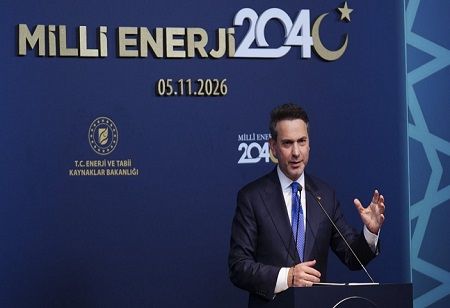
Turkiye's National Energy 2040 Plan targets 175 GW of solar and wind capacity through US$100 billion in investment, alongside major upgrades to electricity grids and storage infrastructure.
Türkiye has unveiled an ambitious national energy roadmap targeting 175 gigawatts (GW) of installed solar and wind power capacity by 2040, backed by an estimated US$100 billion in investment. The strategy, known as the National Energy 2040 Plan, aims to accelerate renewable energy deployment, strengthen electricity infrastructure, reduce dependence on imported energy and support the country's long-term energy security objectives.
Energy and Natural Resources Minister Alparslan Bayraktar announced the targets, during the plan's presentation at the Presidential Dolmabahçe Working Office in Istanbul. He said Türkiye's combined wind and solar capacity had reached approximately 44,000-45,000 megawatts, compared with the earlier target of 120 GW. The new roadmap raises the ambition to 175 GW by 2040, including offshore wind installations.
Also Read: Friction Stir Welding: Shaping the Future of Manufacturing in South-East Asia
The government plans to expand renewable energy through offshore wind projects, international investment partnerships, capacity upgrades at existing power plants and hybrid renewable energy systems. Turkiye is targeting 6 GW of offshore wind capacity by 2040, with its first offshore wind Renewable Energy Resource Area (YEKA) tender planned for April 2027. The tender specifications are expected to be published in November 2026.
The broader energy strategy also focuses on expanding electricity generation and modernising transmission and distribution networks. Türkiye aims to increase its total installed electricity capacity from approximately 123 GW in 2025 to 281 GW by 2040. The share of renewable energy in the country's installed capacity is expected to rise from 63% to 77% during this period.
To accommodate higher renewable generation and growing electricity consumption, the government plans to invest US$36 billion in transmission infrastructure. The programme includes expanding high-voltage transmission lines from 77,000 kilometres to 112,000 kilometres and increasing transformer capacity from 200 GW to 316 GW. The country also plans to expand electricity interconnection capacity from 5.4 GW to 15 GW and develop approximately 140 gigawatt-hours of energy storage capacity.
Electrification is another major component of the roadmap. Türkiye expects electricity demand to reach 680 terawatt-hours by 2040, driven by electric vehicles, data centres, industrial activity and green hydrogen production. The government estimates that data centres alone could require an additional 55 terawatt-hours of electricity by that year.
Also Read: Embracing IoT Integration for Smarter Manufacturing
The plan also includes targets for energy efficiency, nuclear power and domestic energy production. Türkiye aims to reduce energy intensity by 40% between 2025 and 2040 and increase nuclear capacity to approximately 10 GW by 2040. Five major state-owned energy companies are expected to undertake investments totalling US$210 billion over the same period.
The roadmap forms part of Türkiye's broader objective of improving energy independence and supporting its 2053 net-zero emissions ambition. The government intends to present its energy transition priorities to international partners during the COP31 climate conference in Antalya from November 9 to 20, 2026.