

Penang launches its Smart City Master Plan 2040 and MBPP Action Plan 2030 to strengthen data integration, digital infrastructure and sustainable urban management.
Penang has launched two strategic smart city development plans to strengthen data integration, accelerate technology adoption and improve urban management efficiency as part of its long-term sustainable development agenda. The initiatives include the Penang State Smart City Master Plan 2040 and the Penang Island City Council (MBPP) Smart City Action Plan 2030, which aim to coordinate digital transformation efforts and improve public service delivery.
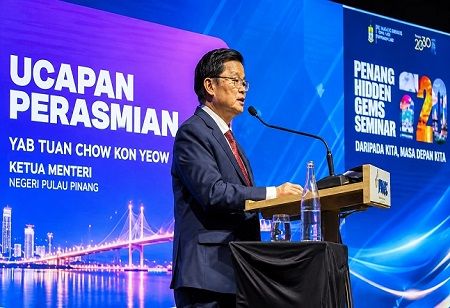
The plans were launched on November 10, 2026, during the 2026 Penang State-level World Town Planning Day celebration at the Penang Waterfront Convention Centre in George Town. Chief Minister Chow Kon Yeow said the initiatives would provide a coordinated framework for smart city development and ensure that technological advancements translate into tangible benefits for residents.
Also Read: Why Human-AI Collaboration is the Future of Business
A major component of the Penang State Smart City Master Plan 2040 is the development of an integrated state data ecosystem. This includes the Penang Urban Intelligence Observatory (PUIO), State Data Exchange (SDX) and Smart Penang Dashboard. These platforms are intended to consolidate information from different sources, support data-driven governance and enable government agencies to make more accurate and effective decisions.
The master plan, prepared by PLANMalaysia Penang, outlines seven key sectors: Smart People, Smart Living, Smart Environment, Smart Government, Smart Economy, Smart Mobility and Smart Digital Infrastructure. These areas will guide the adoption of digital technologies, innovation and integrated infrastructure across the state. The government aims to establish a more mature smart city ecosystem by 2040 through stronger governance, improved connectivity and technology-enabled urban planning.
The MBPP Smart City Action Plan 2030 will focus on translating these broader objectives into practical initiatives for Penang Island residents. Its priorities include improving municipal service efficiency, managing urban mobility, strengthening digital infrastructure, promoting environmental sustainability and enhancing community well-being. The plan is also expected to support better coordination of local government services and urban development activities.
Chow highlighted the importance of data-driven planning in addressing challenges such as flooding, traffic congestion, solid waste management and rising urban temperatures. Integrating technology into urban administration can help authorities monitor infrastructure requirements, improve resource allocation and respond more effectively to emerging environmental and mobility concerns.
Also Read: How AI is reshaping Testing and Manufacturing in India
He also noted that Penang's economic growth requires strategic urban planning and quality infrastructure. The state's exports reached RM113.2 billion in September 2026, while 177 manufacturing projects worth RM17.32 billion were approved between January and June 2026. These projects have the potential to generate 19,337 employment opportunities.
The celebration was organised by PLANMalaysia Penang in collaboration with MBPP under the theme, "Our Cities, Our Future, Together Shaping a Prosperous, Resilient and Thriving Penang." The two plans are expected to provide a framework for aligning economic growth, digital transformation and sustainable urban development across the state.