

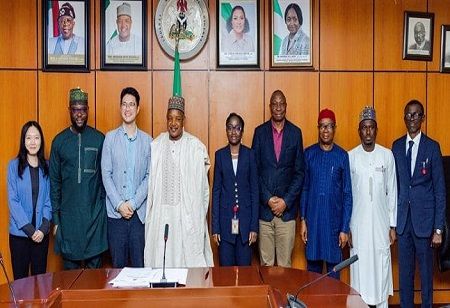
Nigeria's Federal Government has urged the Food and Agriculture Organization (FAO) and the Korea International Cooperation Agency (KOICA) to align their agricultural projects with the country's national development priorities, with a focus on resilient farming systems, youth employment, and measurable long-term outcomes.
The Federal Government of Nigeria has called on the Food and Agriculture Organization of the United Nations (FAO) and the Korea International Cooperation Agency (KOICA) to ensure that their agricultural interventions are closely aligned with the country's national development priorities.
The appeal was made during a meeting at the Federal Ministry of Budget and Economic Planning, where officials discussed the upcoming KOICA–FAO 2026 Multi-Bilateral Project aimed at strengthening Nigeria's agricultural sector.
Minister of Budget and Economic Planning, Senator Abubakar Atiku Bagudu, emphasised that development initiatives should deliver measurable, scalable, and sustainable outcomes while supporting Nigeria's long-term development agenda, including Agenda 2050. He noted that coordinated planning is essential in Nigeria's federal governance structure, where responsibilities are shared across federal, state, and local governments.
Also Read: Why Smart Factories Need Smarter AI Governance
The KOICA-FAO 2026 Multi-Bilateral Project is designed to promote climate-resilient agricultural systems while creating green employment opportunities for young people in Nigeria and other participating African countries. The initiative seeks to improve agricultural productivity, strengthen food security, and encourage sustainable farming practices through international collaboration.
Bagudu highlighted Nigeria's longstanding partnership with the Republic of Korea through KOICA, noting that the country's transformation from an agriculture-based economy into a global industrial leader offers valuable lessons in agricultural productivity, value addition, food processing, and export development. He encouraged development partners to design focused interventions that can be implemented in selected communities and later replicated on a broader scale.
The minister also stressed the importance of aligning donor-funded programmes with Nigeria's broader agricultural and economic strategies to maximise their impact. He said stronger coordination between government institutions and international partners would help improve resource utilisation, enhance accountability, and deliver lasting benefits to farming communities across the country.
Also Read: Why Diversified Supply Chains are Vital for APAC Manufacturers
The discussions reflect Nigeria's broader efforts to modernise its agricultural sector through strategic partnerships, climate-smart farming, and youth-focused employment initiatives. By ensuring that international development projects support national priorities, the government aims to build a more resilient agricultural system capable of improving food security, stimulating rural development, and driving long-term economic growth.