

India’s offshore energy landscape is entering a new era, one where oil and gas refiners share the horizon with offshore wind turbines, solar arrays, and emerging low-carbon technologies. The shift isn’t about replacement; it’s about coexistence. The future lies in hybrid offshore models that integrate hydrocarbons and renewables to deliver both energy security and sustainability.
A market in motion
India’s offshore ecosystem has been anchored in oil and gas exploration and production. However, recent policy movements, including offshore wind lease frameworks, viability gap funding, and accelerated decarbonization goals, signal a fundamental shift in direction.
The government’s roadmap for offshore wind projects along the coasts of Gujarat and Tamil Nadu, coupled with its commitment to achieving 500 GW of renewable capacity by 2030, points toward a blended future where traditional and renewable offshore assets operate side by side.
This transition is also being shaped by global market dynamics. Energy demand is rising yet so is the urgency to decarbonize. The result is a pragmatic evolution, using existing offshore capabilities, engineering expertise, subsea infrastructure, and project management know-how to enable the next generation of low-carbon solutions.
India’s offshore market in the current landscape
India’s offshore market is at a pivotal phase of expansion and diversification. Oil and gas continue to dominate, driven largely by investments in redevelopment projects across Mumbai High and KG Basin regions. These projects include new well platforms, enhanced recovery systems, and subsea tiebacks aimed at sustaining production and improving efficiencies across mature fields.
At the same time, India’s offshore wind pipeline is gaining shape. The government has issued initial lease rules and is preparing for the first tranche of seabed auctions, backed by viability gap funding to improve project economics. Several global developers have expressed interest, and technical studies covering seabed mapping, wind resource assessments, and grid integration are already underway along both the western and eastern coastlines.
A notable development is the emergence of offshore services and supply chain clusters. Indian shipyards, fabrication yards, and subsea engineering firms are expanding capabilities to serve both oil and gas and offshore wind projects. This dual-capacity evolution is positioning India as a competitive offshore manufacturing hub for Asia.
Hybrid models at sea
The hybridization of offshore energy is already taking shape globally and will soon take root in India. Examples include:
- Co-located infrastructure: Wind farms or floating solar installations that share transmission and logistics networks with oil and gas assets.
- Electrified operations: Powering offshore platforms with renewable energy to cut emissions and lower operating costs.
- Carbon capture and storage (CCS): Leveraging depleted offshore reservoirs to store captured carbon, closing the loop on industrial emissions.
- Green hydrogen hubs: Producing hydrogen at sea using renewable electricity, located close to industrial demand centers along India’s coastline.
Each of these pathways requires collaboration across sectors, among energy operators, regulators, technology providers, and coastal state agencies, to harmonize regulation, infrastructure, and investment.
The role of policy and regulation
For India to unlock the full potential of its offshore hybrid energy model, policy consistency will be key. The recently announced offshore wind lease rules are a strong start, but predictable frameworks for grid integration, environmental clearance, and maritime zoning will determine how quickly large-scale projects move forward.
Equally important is a financing ecosystem that recognizes the unique risk profile of offshore projects. Blended finance, combining public capital, green bonds, and private investment, can help bridge the gap between early-stage innovation and commercial viability.
Defining success in the dual-energy era
Success in this evolving frontier won’t be defined by production volumes alone. It will hinge on three capabilities:
- Integration: The ability to combine hydrocarbons, renewables, and decarbonization technologies into cohesive, efficient systems.
- Resilience: Building supply chains, digital operations, and skilled talent that can adapt to regulatory and technological change.
- Sustainability: Measuring success not only in terms of output but also in emissions reduction, circularity, and long-term community value.
India’s advantage lies in its engineering talent and growing digital capability centers that support offshore design, simulation, and operations. By aligning this talent base with policy and capital, India can accelerate its transition from an offshore producer to an offshore innovator.
Agility as a strategic imperative
As the offshore energy sector becomes increasingly interconnected, agility, both organizational and technological, will define leadership. Companies that invest in modular solutions, flexible project design, and cross-disciplinary teams will be more capable of managing assets across the energy spectrum.
For industry leaders, this is an inflection point: to move beyond traditional boundaries and design the offshore ecosystem of the future, one that sustains economic growth while meeting global climate goals.
India’s offshore energy story is being rewritten. What began as a tale of exploration and extraction is evolving into one of integration and innovation. The next decade will be defined by how effectively the industry blends conventional strength with emerging opportunity. Those who embrace hybrid thinking, combining reliability with responsibility, will not only power India’s growth but also shape the blueprint for the global offshore energy transition.
About the Author:
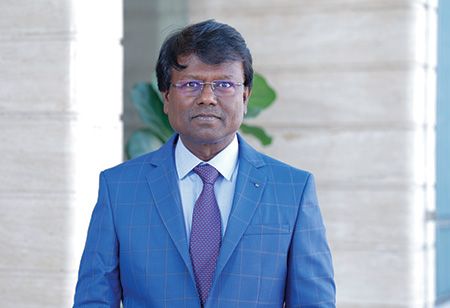
Brathaban Karuppaiah is the Country General Manager of SBM Offshore India and a seasoned industry leader with over 30 years of experience in the execution of FEED, EPCm, and EPC projects across the power, oil & gas, process plant, and infrastructure sectors. His core expertise lies in project management and engineering management, with a strong track record of delivering complex international projects in refinery, petrochemical, chemical, power, and infrastructure domains.