
The US and Japan are investing in alternative supplies of gallium, germanium and indium as China tightens mineral exports. New projects, subsidies and bilateral initiatives aim to strengthen semiconductor and defence supply chains while reducing dependence on China.
The United States and Japan are accelerating efforts to build alternative supply chains for critical minerals used in semiconductors, defence systems and advanced electronics as China increasingly uses export controls to influence global supplies. Both countries are backing new mining, refining and processing projects, but regulatory delays and geopolitical tensions could slow efforts to reduce dependence on Chinese materials.
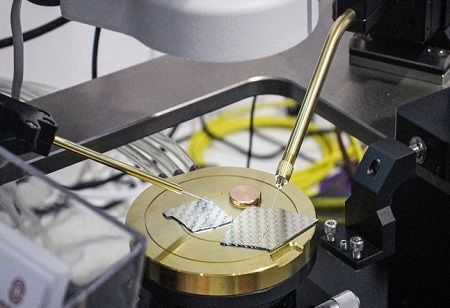
Gallium, germanium and indium have emerged as particular areas of concern because they are essential to compound semiconductor technologies and other high-performance applications. China has restricted indium exports since February 2025, while restrictions on gallium and germanium have added pressure to Western supply chains. Indium prices have risen sharply, while Western warehouse prices for gallium and germanium have also moved significantly above domestic Chinese levels.
Also Read: The Future of Aerospace Manufacturing: Key Trends to Watch
Washington is responding with increased financial support for domestic and allied critical-mineral capacity. On August 31, the US Department of Defense announced a $174 million equity investment to support a gallium production facility at Alcoa’s Wagerup refinery in Australia. The project, backed by Japan’s Sojitz and Export Finance Australia, is expected to produce about 100 metric tons of gallium annually for applications including radar and missile defence.
The US Department of Energy has separately committed $500 million to seven projects aimed at expanding critical-mineral processing, battery manufacturing and recycling. These investments form part of a broader strategy to strengthen domestic capacity and develop more diversified supply networks.
Japan is also central to the diversification effort. Tokyo and Washington signed an Action Plan on Critical Minerals in March 2026 to develop strategic trade policies and border mechanisms designed to reduce supply-chain vulnerabilities. The initiative seeks to expand production and diversify sources while strengthening the downstream industries dependent on imported critical minerals.
For semiconductor manufacturers, the immediate challenge remains supply-chain friction. Industry executives report longer licensing procedures, additional paperwork and higher material costs. Lumentum has warned that shortages of indium phosphide, used in lasers for AI data centres, could become increasingly severe as demand for optical components rises.
Also Read: Unlocking Supply Chain Resilience: The Power of Digital Transformation
Japan already hosts several major suppliers of gallium arsenide and indium phosphide substrates, including Sumitomo Electric, Sumitomo Chemical and DOWA Electronics Materials. Their presence provides an important foundation for a broader US-Japan supply network, although processing and upstream mineral capacity remains concentrated in a limited number of countries.
The emerging strategy reflects a wider shift toward securing critical minerals as a component of economic and national security. While Washington and Tokyo are investing heavily in alternative sources, building mines, refineries and processing facilities requires substantial capital and time. Until those capacities expand, semiconductor and defence manufacturers are likely to remain exposed to China's influence over critical-mineral supply chains.