

Bangladesh and Turkmenistan deepen cooperation in energy, trade and investment, with Ashgabat offering support for energy security and fertiliser supplies while both sides pursue broader economic partnerships under a 2027–2029 action plan.
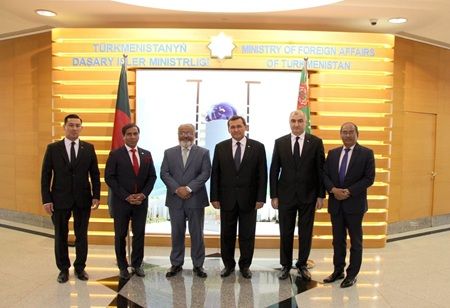
Bangladesh and Turkmenistan are strengthening bilateral cooperation across energy, trade, investment and economic development, with Turkmenistan expressing interest in supporting Bangladesh’s energy security. The discussions take place during political consultations between the two countries in Ashgabat.
The consultations are led by Bangladesh Foreign Ministry Secretary (Bilateral-East and West) Dr M Nazrul Islam and Turkmenistan’s Deputy Foreign Minister Ahmet Gurbanov. Both sides identify significant untapped potential in their bilateral relationship and emphasise the need to expand economic and commercial engagement.
Also read: Azerbaijan, Romania Discuss Ways to Strengthen Cooperation
Energy emerges as a key area of cooperation, with Turkmenistan expressing interest in supporting Bangladesh’s efforts to strengthen energy security. The two sides also explore cooperation in petrochemicals, agriculture and fertilisers, with Turkmenistan offering to supply fertilisers to Bangladesh.
Bangladesh, meanwhile, seeks greater access for its products in the Turkmen market. It encourages Turkmenistan to increase imports of jute and jute goods, ceramics, light engineering products and semiconductors. Both sides also identify opportunities to connect Bangladesh’s strong ready-made garment industry with Turkmenistan’s cotton production capabilities, creating scope for cooperation across the textile and apparel value chain.
The pharmaceutical sector also emerges as a potential area of partnership, with Turkmenistan showing interest in Bangladesh’s manufacturing capabilities and expertise. Such cooperation could expand the relationship beyond traditional trade into industrial and value-added sectors.
The two countries agree to work on a proposed Programme of Action for 2027–2029, covering trade and economic cooperation, culture, tourism, investment promotion and protection, industrial cooperation, avoidance of double taxation and cooperation between foreign service academies.
The proposed programme also aims to encourage stronger engagement between private companies and chambers of commerce. Bangladesh invites Turkmen investors to explore opportunities in its special economic zones, while both sides discuss establishing a Joint Working Group on Trade and Economic Cooperation.
Beyond economic relations, Dhaka and Ashgabat agree to strengthen people-to-people connections through cooperation in education, culture and sports. They also explore employment opportunities in Turkmenistan for Bangladeshi skilled and semi-skilled workers.
The two countries further agree to coordinate on regional and international issues through platforms including the United Nations, Organisation of Islamic Cooperation and Non-Aligned Movement. Bangladesh appreciates Turkmenistan’s support for its candidature for the presidency of the 81st UN General Assembly, while Turkmenistan reiterates its support for Bangladesh on the Rohingya issue.
Also read: Enhancing Agricultural Productivity Through AI-Powered Digital Tools
During a separate meeting, Turkmen Foreign Minister Rashid Meredov stresses the importance of high-level exchanges and expresses readiness to visit Bangladesh. Both sides also agree that regular political consultations can help advance pragmatic and result-oriented initiatives.
The proposed 2027–2029 action plan places trade, investment, energy, food security and climate security at the centre of the expanding partnership. Through these initiatives, Bangladesh and Turkmenistan seek to convert growing diplomatic engagement into concrete economic and strategic cooperation.