

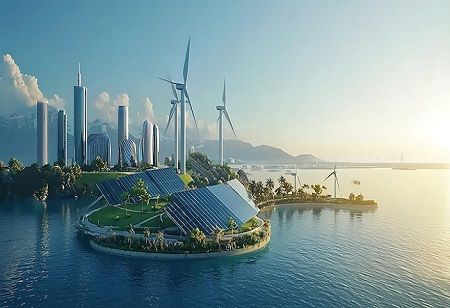
- Singapore launches first National Adaptation Plan in 2026.
- 2026 declared Year of Climate Adaptation; NAP due 2027.
- Focus heat resilience, coastal protection, solar expansion to net-zero.
Singapore has inaugurated its first ever National Adaptation Plan (NAP) to strengthen climate resilience in the face of growing threats such as increased heat, sea level rise, and extreme weather events. Minister for Sustainability and the Environment Grace Fu revealed that the plan marks 2026 as "Year of Climate Adaptation, " a sign of the country's turning focus toward climate change adaptation, i.e. readying infrastructure, communities, and the vulnerable groups for a warmer climate.
After gathering comments from the public, conducting focus group sessions, and exhibitions, the complete NAP will be ready and published in 2027. Major areas of intervention are heat resilience, coastal and flood protection, water security, and food resilience.
A new Heat Resilience Policy Office has been set up to orchestrate government efforts in protecting outdoor workers, the elderly, and other vulnerable groups through research on heat impacts, cooling technologies, and behavioral changes. The government has earmarked S$40 million for R&D on the effects of extreme heat and adaptation measures, in addition to scaling up the heat stress sensor network across the island.
Also Read: Vietnam, Brazil Deepen Ties in Agri, Energy, Biotech
Upgrades in coastal defense are progressing, and conceptual studies for the northwest coast (Tuas to Lim Chu Kang) have been finished. Besides that, site, specific studies are planned for Sentosa and the Southwest Coast in 2026. These actions will protect about 30% of Singapore's land, most which is less than 5m above sea level, including important freshwater reservoirs.
At the same time, Singapore is not only committing to but also speedily expanding solar energy as a major contributor to its net, zero emissions target by 2050. One of the programs through which solar panels are being installed on public housing rooftops, schools, and government buildings managed by the Housing and Development Board is SolarNova.
Large, scale floating solar farms, such as Tengeh Reservoirone of the largest in the world produce clean power while helping to reduce water evaporation. To diversify its energy sources, Singapore is also working on establishing regional power grid partnerships for the import of renewable electricity.
These initiatives align with the Singapore Green Plan 2030, emphasizing proactive adaptation and renewable energy expansion to ensure long-term sustainability and resilience.