

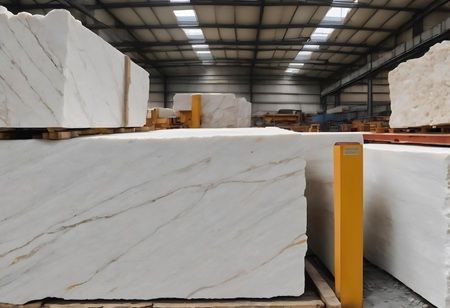
- Oman opens two public marble zones to attract local and international investors.
- Ministry emphasizes processing marble locally, limiting raw exports, and boosting added value.
- High-quality Omani marble exports target GCC countries, India, and South Korean markets.
The Ministry of Energy and Minerals has announced new investment prospects in the marble industry, providing two public mineral zones in Al Sharqiyah North Governorate to both local and international investors to enhance Oman’s mining investment foundation.
The offering timeframe spans from December 28, 2025, to April 28, 2026, focusing on high-quality, economically viable projects backed by solid geological and economic foundations. The two regions span a total of 2.55 square kilometers, with initial research suggesting the existence of dark marble deposits that show promising investment prospects.
Engineer Saud bin Khamis al Mahrouqi, Director General of Minerals at the Ministry, stated that Omani marble has become one of the mining sector's significant success stories, supported by its excellent geological quality and diverse colors, making it competitive in both regional and international markets.
He remarked that Omani marble is widely utilized in making tiles, slabs, and decorative stone, with exports spanning various international markets. This performance showcases the Sultanate of Oman’s significant reserves and the increasing effectiveness of its extraction, processing, and manufacturing value chains.
Also Read: Egypt, China's NORINCO Explore Nuclear and Renewable Energy Ties
He explained that the Ministry's policy focuses on enhancing local added value by limiting the export of unprocessed marble blocks and promoting the manufacturing of higher-value finished and semi-finished goods. Recycling marble waste and connecting it to supporting industries is central to the Ministry’s initiative for a circular economy, aiding in minimizing environmental impact while creating extra economic value.
Al Mahrouqi mentioned that the Ministry is enhancing strategic initiatives to advance the marble industry, which includes the establishment of fully sanctioned public mining areas and the execution of a transparent bidding process that guarantees fair opportunities for investors while offering defined regulatory and legislative structures. Extraction occurs in hilly regions utilizing sophisticated cutting techniques before the transportation of blocks for processing. Exports are mainly focused on GCC markets, India, and South Korea, consistent with the policy limiting raw block exports.