

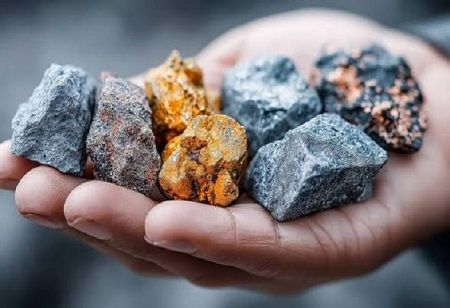
Kazakhstan plans a National Laboratory for Critical Materials in Astana, alongside expanded geological exploration and international partnerships, to strengthen domestic processing and advanced manufacturing.
Kazakhstan plans to establish a National Laboratory for Critical Materials in Astana as part of its efforts to strengthen domestic mineral processing, modernise geological exploration and expand its manufacturing capabilities. The initiative is aimed at reducing dependence on imported materials, attracting international investment and integrating the country more deeply into global supply chains for critical minerals.
The announcement was made by First Deputy Prime Minister Nurlan Nalybayev at a government press conference on November 4, 2026. He highlighted the importance of developing the country's mineral resources and moving beyond the extraction of raw materials towards higher-value industrial processing and manufacturing.
Also Read: The Evolving Landscape of India's Offshore Energy Sector
The proposed laboratory will help identify priority areas for developing Kazakhstan's mineral resource base and support the production of materials required by advanced industries. The government has identified four major manufacturing priorities: battery materials, components and materials for jet engines, semiconductor manufacturing and the development of a complete production cycle for permanent magnets.
These sectors are gaining importance as demand increases from the automotive, renewable energy and advanced manufacturing industries. Battery materials are essential for electric vehicle production and energy storage systems, while specialised alloys and materials are required for aerospace applications. Semiconductor manufacturing and permanent magnets are also important for electronics, industrial equipment and modern energy technologies.
Kazakhstan is pursuing these objectives through cooperation with international companies and research institutions. Existing partnerships include Germany's Bergbau AG, the Korea Institute of Geoscience and Mineral Resources and Australia's Lindian Resources Limited. The involvement of international partners is expected to support technical expertise, investment and the development of specialised processing capabilities.
The country is also expanding its geological exploration programme to identify new mineral deposits. For the first time, Kazakhstan has launched government-led geological mapping at a scale of 1:50,000. Over the next three years, the government plans to implement 20 exploration projects covering approximately 100,000 square kilometres.
Also Read: Embracing Automation: Addressing ASEAN's Manufacturing Challenges
Advanced exploration technologies are being introduced alongside conventional geological methods. These include Ionic Leach technology for identifying concealed mineral deposits, artificial intelligence, satellite data and unmanned aerial vehicles. Preliminary assessments have identified seven potentially promising sites, with locations confirmed for further development expected to be prepared for auction in 2027.
Another important initiative involves integrating approximately 4.8 million records of primary geological information into the Unified Subsoil Use Platform. The digital platform is expected to improve access to geological data and support more efficient exploration activities.