

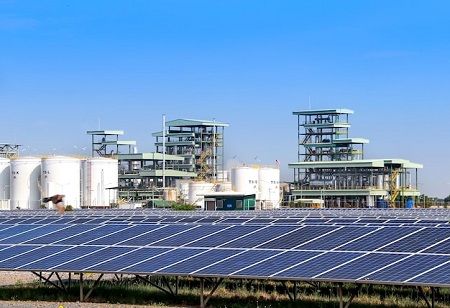
- Kazakhstan explores $15 billion industrial park to boost value-added manufacturing capacity nationwide.
- Proposed Pavlodar project targets deep processing of minerals with advanced energy infrastructure.
- Xinfa partnership could create 10,000 jobs and strengthen Kazakhstan’s industrial modernization agenda.
Kazakhstan is evaluating the development of a large-scale industrial park valued at approximately $15 billion, following high-level discussions between First Deputy Prime Minister Roman Sklyar and Zhao Tingyun, Vice Chairman of China’s Xinfa Group. The meeting, held on January 8, focused on expanding bilateral investment cooperation and examining the practical steps required to implement one of the country’s most ambitious industrial projects to date.
The discussions centered on plans to establish a modern, full-cycle industrial park in the Pavlodar Region. The proposed facility would prioritize the deep processing of raw materials and the production of high-value-added industrial goods, aligning with Kazakhstan’s broader strategy of industrial modernization and economic diversification.
Under the current project concept, the industrial park would span more than 3,000 hectares and leverage Kazakhstan’s extensive natural resource base. Key resources identified for advanced processing include coal, bauxite, copper, fluorite, and limestone. The plan envisions the construction of metallurgical plants capable of producing alumina, aluminum, and copper, creating integrated value chains that move beyond basic resource extraction.
In addition to heavy industry, the project includes the development of robust energy infrastructure, with an emphasis on incorporating renewable energy sources to support sustainable operations. Proposed manufacturing units would also produce soda ash, carbon-based materials, and environmentally friendly construction solutions, reflecting a growing focus on green and resource-efficient industrial development.
Also Read: The Evolving Landscape of India's Offshore Energy Sector
With a full implementation, the industrial park will produce over 10,000 jobs and a huge boost to the industrial capacity of Kazakhstan. As Zhao Tingyun indicated, Xinfa Group had already made preliminary research on the mineral resources of Kazakhstan, especially the bauxite, coal, and copper, and was certain of their appropriateness in the construction of deep-processing industries and high-value production facilities.
Roman Sklyar emphasized that industrial modernization, the attraction of strategic investors, and the development of technology-driven industries remain central to Kazakhstan’s state economic policy. He highlighted the country’s stable legal and institutional framework, designed to support major investment initiatives through transparent regulations and long-term partnership mechanisms.
Both sides concluded the meeting by reaffirming their interest in advancing the project. They agreed that continued dialogue, technical evaluations, and expert consultations will be essential to moving the initiative from concept to execution, while also strengthening long-term industrial and investment cooperation between Kazakhstan and China.