

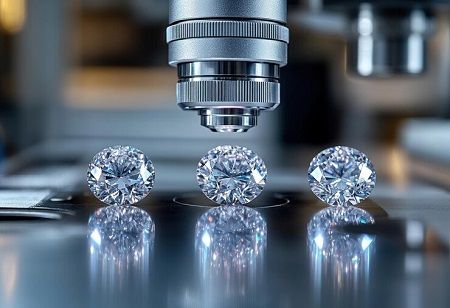
- US and Japan partner to scale synthetic diamond production, strengthening semiconductor and precision supply chains.
- Deal aims to reduce reliance on China while securing critical materials for advanced chips and technologies.
- Collaboration supports innovation, investment, and resilient manufacturing ecosystems across allied economies amid global supply risks.
The US and Japan are said to be collaborating on a large-scale project to set up a facility for the production of synthetic diamonds in the US, with the aim of increasing the availability of a material that is essential in the manufacturing of semiconductors and high-precision components. This project is part of the overall investment of $550 billion by Japan.
Synthetic diamonds are very important in the technology industry because they are used for ultra-fine polishing of semiconductors, machining hard materials, and thermal management in advanced electronics.
They are also used in quantum device applications and other high-precision industries that require extremely hard and thermally conductive materials.
The proposed project may be one of the first projects to be announced before the expected visit of Japanese Prime Minister Sanae Takaichi to the United States in early March 2026. Although the details of the project are still being negotiated, it is reported that the US plans to accelerate the domestic production of synthetic diamonds with the active participation of Japanese firms.
Also read: Uzbekistan and US Expand Cooperation in Oil & Gas Sector
The aim is to develop a joint US-Japan supply chain that would depend less on China, which now dominates the global production of synthetic diamonds, and which recently imposed export controls on certain artificial diamond materials.
The funding for this initiative is expected to include a combination of equity investments, loan guarantees, and financing assistance from Japanese government-related entities such as the Japan Bank for International Cooperation (JBIC) and Nippon Export and Investment Insurance (NEXI). Japanese companies such as Hitachi are reportedly in talks, although no agreements have been reached.
This strategic technology collaboration is an example of how the United States and Japan are working to enhance their economic relationship to strengthen their critical manufacturing capabilities and mitigate risks in the global supply chain for materials that are important to next-generation industries.