

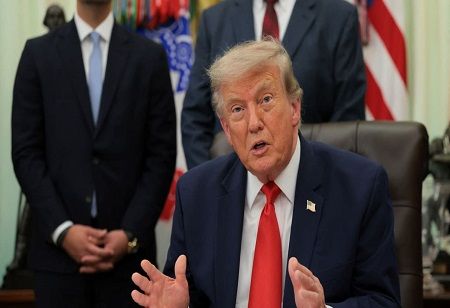
US President Donald Trump announces renewed talks with Iran to ease Strait of Hormuz tensions, while Gulf nations remain on alert as diplomacy seeks to reduce regional conflict and safeguard energy security.
US President Donald Trump has announced that the United States will begin a new round of talks with Iran in an effort to ease tensions in the Gulf and seek a diplomatic solution to the ongoing dispute over the Strait of Hormuz. The negotiations come after Washington paused plans for military strikes, signalling a renewed emphasis on diplomacy while maintaining pressure on Tehran.
Speaking to reporters, Trump confirmed that discussions with Iran are scheduled to begin on Monday and said he is prepared to give diplomacy an opportunity before considering further military action. While expressing cautious optimism, he stressed that the United States has not set a deadline for reaching an agreement and will evaluate progress as the talks proceed.
Also read: Kyrgyz, Azerbaijani Leaders Strengthen Bilateral Ties
The negotiations are expected to focus on reopening the Strait of Hormuz, one of the world's most strategically important maritime routes through which a significant share of global oil and liquefied natural gas shipments passes. The prolonged disruption of commercial shipping in the waterway has heightened concerns over global energy security, increased transportation costs and contributed to volatility in international oil markets.
The diplomatic initiative follows mediation efforts by several Gulf countries that have encouraged both Washington and Tehran to pursue dialogue instead of further military escalation. Reports indicate that regional partners have urged restraint to prevent a broader conflict that could threaten economic stability and disrupt global energy supplies.
Despite the renewed diplomatic engagement, regional security concerns remain elevated. Israel has reiterated that it reserves the right to act independently if it believes Iran is advancing its nuclear or missile programmes, regardless of the outcome of the US-Iran negotiations. Meanwhile, Gulf countries, including Kuwait, Saudi Arabia and Iraq, continue to maintain heightened security measures amid the uncertain regional environment.
Iran has continued diplomatic contacts with regional partners, including Oman, regarding mechanisms to manage maritime navigation through the Strait of Hormuz. However, Tehran maintains that discussions on shipping arrangements are separate from broader negotiations concerning its nuclear programme and regional security issues.
Also read: Why Smart Factories Need Smarter AI Governance
Financial markets have responded positively to expectations of renewed diplomacy. Hopes that negotiations could reduce the risk of prolonged disruptions to global energy supplies have contributed to a decline in international oil prices, easing concerns over inflation and supporting investor confidence across global markets.
The upcoming talks represent another attempt to reduce tensions following months of military confrontation and diplomatic efforts. While significant differences remain over maritime security, sanctions and Iran's nuclear activities, both sides have signalled a willingness to continue indirect engagement through mediators. The outcome of the negotiations is expected to have significant implications for regional stability, global energy markets and broader geopolitical relations in the Middle East.