

Singapore plans further land reclamation to create space for industrial growth, advanced manufacturing and infrastructure, while new projects also address coastal protection, water resilience and long-term development needs.
Singapore is preparing for further land reclamation as it looks to create additional space for industrial development, infrastructure and other long-term national needs. The city-state, which has limited land availability, is planning new reclamation projects alongside efforts to make better use of existing industrial areas.
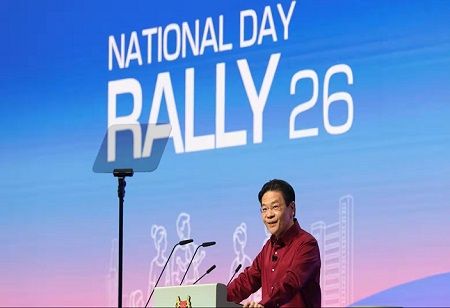
At the 2026 National Day Rally, Prime Minister Lawrence Wong announced plans to transform several islands south of Jurong Island into a new western island. The proposed development is expected to support future industries, including advanced manufacturing and new power-generation infrastructure, while also providing space for defence-related needs.
Also Read: The Future of Aerospace Manufacturing: Key Trends to Watch
The government has yet to finalise the reclamation profile, construction methods, land-use plans or implementation timeline for the proposed western island. Technical studies and environmental assessments will be undertaken before decisions are finalised. Authorities have also said that stakeholder engagement will form part of the planning process.
The availability of industrial land is an important consideration. Jurong Island covers about 3,000 hectares, with less than one-third currently available for development, according to Singapore's Ministry of Trade and Industry. The government is assessing how existing land can be used while planning for additional capacity through reclamation.
Singapore is also advancing the Long Island project off its East Coast. The initiative involves reclaiming about 800 hectares and is designed to address several objectives, including coastal protection against rising sea levels, water resilience and the creation of land for future development. The project could also add around 20 kilometres of waterfront parks.
Land reclamation has been a significant part of Singapore's development strategy. Since independence, the country has added roughly 160 to 165 square kilometres of land through reclamation, increasing its total land area from about 581.5 square kilometres in 1965 to approximately 744 square kilometres today.
Also Read: Carbon Nanotubes: The Future of Lightweight and Strong Materials in Manufacturing
Authorities are also examining alternatives to conventional reclamation. Singapore has used empoldering, a method that can reduce the quantity of sand required, while conventional infilling faces challenges including rising costs and limited availability of suitable fill material.
The planned projects reflect Singapore's continuing effort to balance industrial expansion, infrastructure requirements, environmental considerations and its physical land constraints.