

Kazakhstan and China establish a portfolio of 260 joint industrial projects worth over $62 billion, spanning manufacturing, energy, agriculture, technology, AI and industrial development.
Kazakhstan and China have assembled a portfolio of 260 major joint industrial projects worth more than $62 billion, as the two countries expand investment cooperation across manufacturing, energy, technology, agriculture and other sectors.
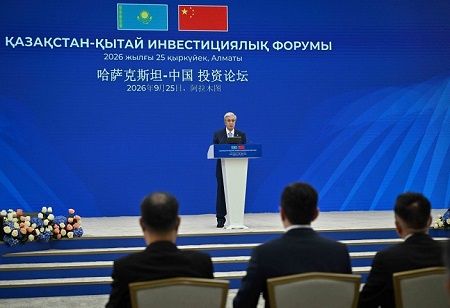
Kazakh President Kassym-Jomart Tokayev announced the portfolio at the Kazakhstan-China Investment Forum in Almaty. He said Chinese companies are participating in projects covering automotive manufacturing, silicon production, metallurgy, petrochemicals and energy storage systems.
Also Read: Revolutionizing the Manufacturing Industry with Web 3 Technology
The portfolio also includes projects focused on improving and restoring low-productivity oil wells. In the Aktobe region, Kazakhstan is establishing a special industrial zone on a pilot basis in cooperation with Chinese company Jinyi Holding Group. The zone is expected to operate according to international standards, according to Tokayev.
Agriculture and related processing are another area of cooperation. Chinese companies including Lihua, Fufeng and Dalian Hesheng Holdings are involved in projects aimed at developing a vertically integrated cotton and textile cluster, as well as expanding the processing of corn and grain. These initiatives are intended to add greater processing capacity to Kazakhstan's agricultural sector.
Tokayev said the growing project pipeline could support a shift from individual investment projects toward integrated production ecosystems. He proposed a joint Kazakh-Chinese programme under the concept “Common History Destiny. Designed and Made in Both China and Kazakhstan,” under which the governments would work with companies to identify projects and accelerate their implementation.
Digitalisation and artificial intelligence also featured prominently in the discussions. Tokayev said Kazakhstan is open to cooperation with technology centres worldwide and is interested in technology transfer and the establishment of joint engineering and research facilities.
Kazakhstan became one of the founding members of the World Organization for Cooperation in Artificial Intelligence this year, according to Tokayev. The country also plans to establish its first Kazakh-Chinese School of Artificial Intelligence in the capital to support the development of specialised skills.
Also Read: The Importance of Sustainable Manufacturing in a Circular Economy
Tokayev also highlighted Alatau City, describing the large-scale development as part of the countries' technological partnership and a potential business centre connecting China with Central Asia and European markets.
The expanded project portfolio reflects efforts by Kazakhstan and China to deepen industrial cooperation while developing manufacturing, processing and technology capabilities with access to regional and international markets.