

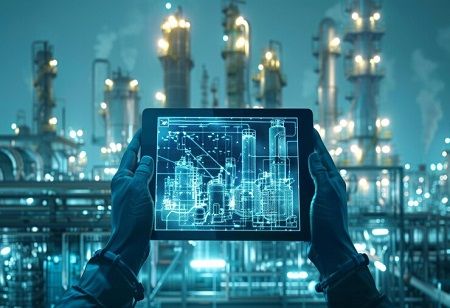
- UAE adopts AI to guide oil production decisions, replacing traditional simulation methods in energy sector.
- Digitalization across value chain, from extraction to logistics, revolutionizes manufacturing, customs clearance, and distribution.
- Robotics deployed at industrial sites to minimize downtime, reducing shutdown periods from months to days.
The UAE’s announcement that it is leveraging AI in its production activities, especially in its oil and gas sector, was made public by its Minister for Foreign Trade, Thani Ahmed Al Zeyoudi, during a conference held in Davos, a town in the Swiss Alps.
The announcement was a landmark in the overall uptake of AI, robotics, and digital technologies in key sectors of the UAE, including manufacturing, logistics, and energy.
In a panel discussion on Factories that Think, the UAE’s Minister for Foreign Trade pointed out that AI is instrumental in determining where to carry out production activities, thereby eliminating the need to hire simulation engineers.
Another thing that Al Zeyoudi is noted to have stressed is the effect that digitalization is expected to have on the whole value chain, ranging from extraction to production, logistics, distribution, as well as customs procedures.
Also read: UAE Signs $240M Defence Contracts at UMEX & SimTEX
As he put it, “Digitalization and digital twinning are no longer confined to factories, but are now embedded throughout the whole value chain.” In addition, Al Zeyoudi pointed out the strength that the logistics sector possessed, saying that “the UAE is connected to 250 ports around the world, facilitating customs procedures, enabling customs procedures to take place in just a few minutes, rather than a few days, owing to digital improvements.”
The Minister also put emphasis on the move towards labor-independent models from labor-intensive models, saying the shift is now towards achieving site operational efficiencies through digitalization, as opposed to labor rates. Part of these efforts also involves the use of robotics to ensure sites do not come to complete stop. “Sites that used to shut down for several months can now be monitored by robotics, reducing downtime to just a couple of days,” Al-Zeyoudi states that, amongst other effects of technology on the operations of the country.