
- Forvia secures strategic Sinopec investment to expand hydrogen mobility manufacturing in China.
- China’s hydrogen ecosystem outpaces Europe, attracting global suppliers and redirecting corporate strategies.
- State-backed partnerships enhance market access, cost efficiency, and competitiveness in energy transition.
French automotive technology group Forvia is reinforcing its footprint in China as the country accelerates its push toward hydrogen-based mobility, positioning itself well ahead of Western markets. The company has announced a €40 million ($47 million) capital increase for its hydrogen-focused Chinese subsidiary, supported by a minority investment from Sinopec Capital, the investment arm of China’s state-owned energy giant.
As part of the deal, Sinopec will participate as an industrial partner through its Chaoyang Hydrogen New Energy Venture Capital Fund, providing Forvia with not only financial backing but also strategic access to China’s rapidly expanding hydrogen ecosystem. The partnership is expected to strengthen Forvia’s local market presence, improve cost structures, and unlock opportunities linked to public-sector projects and industrial collaborations.
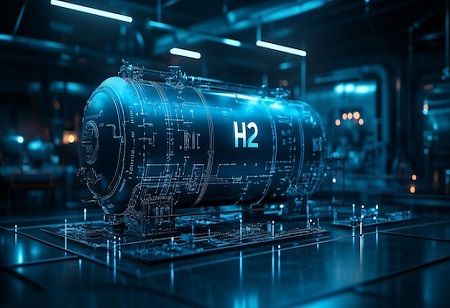
Forvia is already an established player in hydrogen storage technology, manufacturing Type 4 hydrogen storage tanks for vehicle applications across four production sites located in Europe and Asia. By deepening its roots in China, the company aims to scale production and align itself with one of the world’s most ambitious hydrogen mobility rollouts.
Commenting on the development, Ma Chuan, a member of Forvia’s executive committee, said the partnership would accelerate access to both public and private markets, enhance cost competitiveness, and consolidate Forvia’s position as a key contributor to China’s energy transition.
Also Read: Why Packaging for Semicon & Medtech Signals Global Trade Trends
Sinopec’s involvement reflects China’s broader commitment to hydrogen infrastructure. The company has invested heavily in hydrogen production and refuelling networks, including the launch of a 1,150-kilometre hydrogen truck corridor supported by four refuelling stations one of the largest such initiatives globally.
Forvia’s China-focused strategy stands in contrast to developments in Europe, where hydrogen mobility has struggled to gain momentum. In 2025, Stellantis, co-owner of fuel-cell specialist Symbio alongside Forvia, halted its hydrogen fuel-cell development, describing the market as niche with limited growth potential. Similarly, Schaeffler AG scaled back its European hydrogen ambitions in September, shifting focus toward China, where it cited stronger commercial prospects.
Against this backdrop, Forvia’s strategic partnership with Sinopec underscores a clear growth trajectory leveraging China’s policy support, infrastructure investment, and industrial momentum to secure a leading role in the future of hydrogen mobility.